Starlink in Ukraine
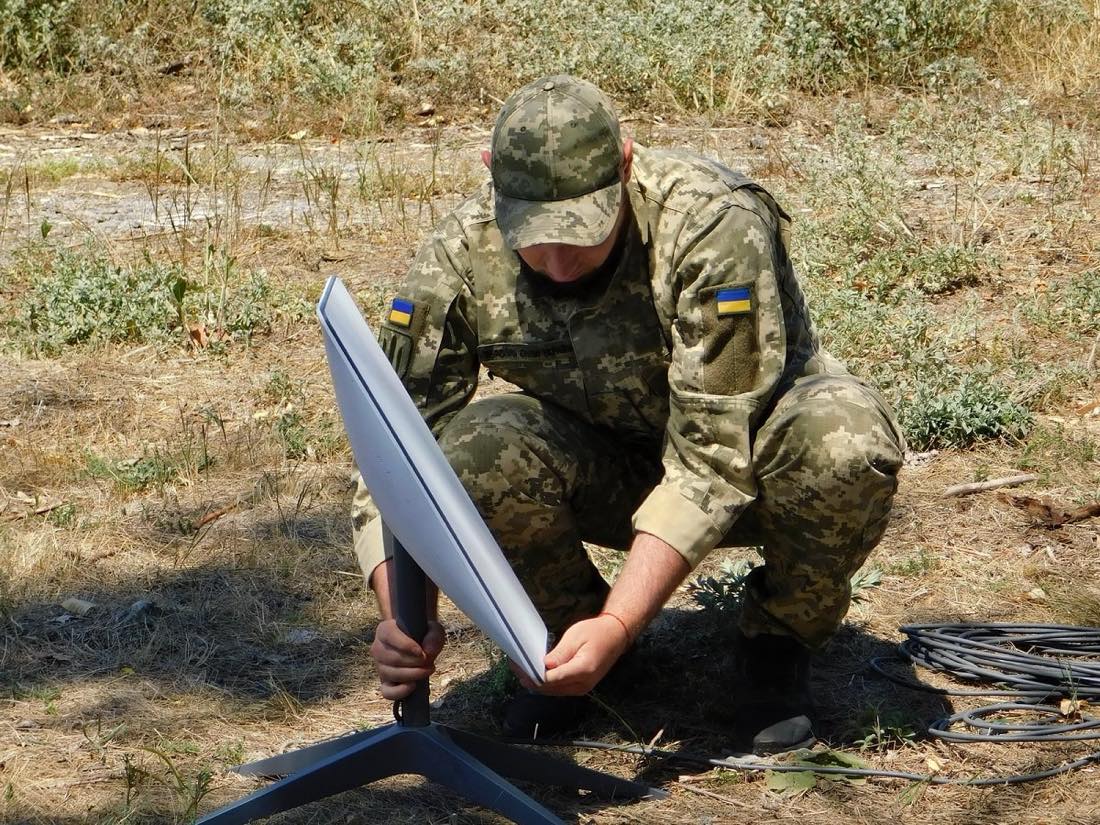

Overnight on October 13–14, Ukrainian drone units found their military Starlink terminals dropping out at speed, and some missions were cancelled. Ukraine's government says SpaceX imposed the limit without warning and calls the timing no coincidence, days after President Trump struck a diesel deal with Moscow and called for Zelensky to be replaced. Others note that the restricted service, Starshield, runs on a Pentagon contract. This page tracks what is confirmed, who is claiming what, and what evidence would settle who ordered the limit, and why.
Ukrainian units report a speed cap on military Starshield terminals in motion from the night of October 13–14 that disrupted drone missions, with no warning. President Zelensky says it was imposed “by the SpaceX and of course by the United States” and that “they knew what they did,” amid wider US pressure on Kyiv, though he says he does not know whether “somebody pushed” Musk. Musk says limits are “decided by the US military and ultimately POTUS.” A senior US official told Axios the administration “had nothing to do with” the restrictions, and White House officials told Ukraine they “don't have control over SpaceX.” Both now deny making the decision: Musk says Washington decides, and Washington says it had nothing to do with it. Yet the cap was imposed overnight and partly eased within a day. No one has taken responsibility on the record, and no document shows who ordered it or why. Service below the cap is reportedly being restored; the cap remains.
What would change this rating ↓
starlink.america2.newsGet America 2.0 in your inbox
Analysis of Russian influence, information warfare and the networks behind them. Free; unsubscribe anytime.
Latest reports
New reporting from major outlets and official sources, listed as it appears. Our monitoring adds headlines from major outlets automatically. "Checked" means our software fetched the full report and confirmed it supports its headline. "Reviewed" means an editor checked it against its source. "Auto" items have not been checked yet. Tap a label for our note. None of this is an endorsement. Our assessment is the rating above.
- 14 Oct, 5:30 PMHow Elon Musk’s surprise Starlink limits could spell disaster for Ukraine (The Times)
reviewed ▾
An editor checked this report against its source. (2026-10-14) - 14 Oct, 4:34 PM‘Starshield systems are owned and controlled by the U.S. government.’ Musk responds to Ukraine’s complaints about restrictions on the military version of Starlink. (Meduza)
reviewed ▾
An editor checked this report against its source. (2026-10-14) - 14 Oct, 4:25 PMUkraine's Starlink restrictions raise suspicions of Musk, Trump retaliation (Axios)
reviewed ▾
An editor checked this report against its source. (2026-10-14) - 14 Oct, 4:17 PMMusk says any limits on Ukraine's Starlink access down to US, not his firm (BBC)
reviewed ▾
An editor checked this report against its source. (2026-10-14) - 14 Oct, 3:51 PMU.S. warnings sow confusion, alarm in Ukraine over intelligence, Starlink access (The Washington Post)
auto ▾
Not checked yet. Listed automatically because it comes from a major outlet or official source. - 14 Oct, 3:35 PMVolodymyr Zelenskyy feels ‘betrayed’ by Donald Trump over Starlink access (The Guardian)
reviewed ▾
Our note: The Musk line ‘This is not under SpaceX control’ quoted here is from a March 2026 post. On October 14 he wrote that Starshield limits are ‘decided by the US military and ultimately POTUS.’An editor checked this report against its source. (2026-10-14) - 14 Oct, 3:00 PMMusk: “Starshield systems are owned and controlled by the US government. Any limits on speed or usage are decided by the US military and ultimately POTUS.” (X (@elonmusk))
reviewed ▾
Our note: Musk's reply to Fedorov. The Pentagon and White House have not confirmed his account.An editor checked this report against its source. (2026-10-14) - 14 Oct, 2:52 PMUkraine says military operations disrupted from new Starlink restrictions (NBC News)
reviewed ▾
An editor checked this report against its source. (2026-10-14) - 14 Oct, 2:38 PMEXCLUSIVE: President Zelensky 'BETRAYED' By Trump & Elon Musk | Piers Morgan Interview (Piers Morgan Uncensored (YouTube))
reviewed ▾
Our note: Zelensky says SpaceX “and of course the United States” imposed the limit and “they knew what they did”; he also says, “I don't know … somebody pushed him.”An editor checked this report against its source. (2026-10-14) - 14 Oct, 2:10 PMФедоров заявив, що робота Starlink на швидкості до 160 км/год відновлюється (Fedorov says Starlink service at up to 160 km/h is being restored) (Новинарня (Novynarnia))
reviewed ⚠ ▾
Caution: Mykhailo Fedorov is a former defence minister who now runs a private defence-tech company. He says service below the 160 km/h cap is coming back; the cap itself remains. No Ukrainian military unit, SpaceX or the Pentagon has confirmed it.An editor checked this report against its source. (2026-10-14) - 14 Oct, 1:24 PMSpaceX limits StarShield speeds on Starlink terminals used by Ukrainian drones (theins.press)
reviewed ▾
Our note: An analyst quoted here says the US customer, not SpaceX, made the decision. He does not say how he knows.An editor checked this report against its source. (2026-10-14) - 14 Oct, 1:18 PMUkrainian drones lose some speed after SpaceX imposes sudden restrictions on use of Starlink (AP News)
reviewed ▾
An editor checked this report against its source. (2026-10-14)
What would change this assessment
The rating measures how well the claim that the limit was imposed for political reasons is supported by evidence, not how plausible it seems. Any one of these would move it.
- partly seenAn explanation from SpaceX or Elon Musk of the cause and scope of the limit, and whether anyone asked for it. Musk, October 14: “Any limits on speed or usage are decided by the US military and ultimately POTUS” (X). He did not say who ordered this limit or why.
- partly seenA statement from the Pentagon, White House or State Department on whether the US government requested or approved the change. A senior US official told Axios the administration “had nothing to do with” the restrictions; the White House has not commented on the record (Axios).
- not seenA document: a contract term, an order, or the notice Ukraine's forces received from customer support.
- not seenWho else is affected: evidence that other Starshield customers got the same cap (a global product change) or that only Ukraine did.
- not seenA reversal or a widening: the limit lifted after talks, or extended to stationary terminals or other uses.
What is actually known
- Starlink and Starshield are not the same thing. Starlink is SpaceX’s commercial satellite internet service; in Ukraine, civilian terminals already had speed limits in motion (WSJ). “Starshield” is SpaceX’s name for its government business, and it covers two different things: a separate network of spy satellites SpaceX is building for the National Reconnaissance Office (Reuters), and a military service plan that runs on the ordinary Starlink satellites, which the US Space Force buys “over the Starlink Satellites/network” (FedScoop). Ukraine’s military uses the second, under a Defense Department contract; the Space Force calls it “not a militarized version of the Starlink satellites” but a service plan “aligned for military use” (San Antonio Express-News). The October 13–14 limit hit that military plan, not civilian Starlink (WSJ).
- Military terminals in motion were limited overnight. Serhii Beskrestnov, an adviser to President Zelensky, said SpaceX limited Starlink terminals in motion, applying to the Starshield "military service package" above 100 miles per hour (Kyiv Independent). Ukraine's 7th Rapid Reaction Corps said connections dropped for 10–20 seconds at 110–120 km/h and that units cancelled some missions (Reuters). Accounts of the threshold vary; some officers said they lost signal at speeds as low as 44 mph (Wall Street Journal).
- Ukraine says it had no warning. According to a Ukrainian official, the armed forces learned of the limits from customer support after filing a complaint, and had no reply from the US government or SpaceX (NBC News).
- Ordinary Starlink may have been hit too. Civilian terminals in Ukraine already had in-motion speed limits; Starshield military accounts had been exempt until now (WSJ). Ukrainian officials now say both Starlink and Starshield were restricted (Axios), and analysts believe the two run on the same satellite network (The Times).
- SpaceX says Kyiv has a hand in speed limits. Starlink's help page for Ukraine says that “in Ukraine, certain in-motion speed limit restrictions are implemented in coordination with the Ukrainian government,” and that the government decides which terminals may operate while “Starlink implements their decisions” (Starlink). The page is undated, does not mention Starshield, and does not say whether Ukraine was consulted on this change; Ukrainian officials say they had no warning (NBC News).
- Drone terminals already needed special permission for speed. Business Insider and WELT reported in August, citing a Ukrainian officer, that since SpaceX’s measures against Russian use, terminals used on drones “now have to be individually registered and authorized for high-speed operations” (Business Insider). The October limit works like a withdrawal of that authorization; who withdrew it is not known.
- Starshield runs on a US Defense Department contract. Asked about the new limits, a Pentagon spokesman referred to the president's comments on intelligence sharing (WSJ).
- It hits midrange drones, not the strikes on Russia's oil industry. Starlink does not work inside Russia, and the drones hitting Russian refineries use other means of navigation and communication (Reuters, WSJ). The limit affects midrange strikes on Russian logistics in occupied Ukraine, interceptors used against jet-powered Shahed drones, and front-line logistics and reconnaissance, a Defense Ministry source said (Kyiv Independent). It also hits air defense. “The speed limit could mean some high-speed interceptors are useless,” said Bob Tollast of the Royal United Services Institute, who added that midrange strike drones diving on supply convoys at about 200 km/h would also be affected; a Ukrainian colonel told The Times the new interceptors were now, in effect, useless (The Times).
- No one will own the decision. Musk says Starshield limits are “decided by the US military and ultimately POTUS” (X); a senior US official told Axios the administration “had nothing to do with” them, and the White House has not commented on the record (Axios). Ukraine's Defense Ministry says it is in contact with the US, SpaceX and NATO, and is deploying backup communication channels (WSJ).
Our assessment: Washington is on the hook
The US government now owns this question. The Pentagon buys Ukraine’s Starshield service (WSJ), and the owner of SpaceX says on the record that the government controls it: limits are “decided by the US military and ultimately POTUS” (X). Unless this proves to be an error or malfunction, the Pentagon and the White House must say who ordered the cap, why, why Ukraine’s forces got no warning, and who decides whether to lift it. So far neither has commented (NBC News, Fox News).
Musk’s disclaimer does not settle SpaceX’s role. SpaceX runs the network the service rides on (FedScoop), Ukraine learned of the cap from SpaceX customer support (NBC News), and in January SpaceX set a speed limit for Ukraine within days of a request from Kyiv (The Record). Pointing to the government does not tell us whether SpaceX sought, shaped or welcomed this change.
Fedorov’s role needs explaining too. A former defense minister who now runs a private defense-tech company announced a partial restoration and thanked Musk, not the Pentagon (X). If Washington decides, whom did he deal with, and on whose behalf?
Our finding: neither the company that runs the network nor the government that pays for it will say it made this decision. Musk says limits are “decided by the US military and ultimately POTUS” (X); a senior US official says the administration “had nothing to do with” them (Axios). But someone changed the settings, twice: the cap went on without warning and was partly eased within a day. A change to a wartime service that no one will own is itself a failure of accountability. The White House and the Pentagon should say on the record whether they ordered or approved it, and SpaceX should say who asked.
This is America 2.0’s editorial position, based on how the service is bought and run and on what its operator now says. The rating above measures something narrower: whether there is evidence the change was made for political reasons.
Why it matters: a Rubicon, and a midterm question
If, as both Kyiv and Musk now say, Washington deliberately cut a capability an ally at war depends on, without warning and on a night when Russia was striking Ukraine’s power grid, that is a crossing of the Rubicon. US policy would no longer only be limiting how Ukraine strikes Russia; it would be weakening how Ukraine defends its own cities.
That makes it a question for the midterm elections. Americans have not turned against Ukraine: 83% view Russia unfavorably, and only 20% say the US gives Ukraine too much support (Pew Research Center, March 2026). Every candidate for Congress should be asked plainly whether they support this decision, and what they will do to reverse it. (We track the risks to the election itself at election2026.america2.news.)
America 2.0 editorial.
Claims in circulation
The most-shared claims, and what public sources can confirm.
ConfirmedUkraine's military Starlink ("Starshield") was restricted overnight, without warning
Origin. Beskrestnov and Ukrainian units, October 14 (Kyiv Independent, Reuters).
What the evidence shows. Several units and a Defense Ministry source describe the same speed-linked dropouts on Starshield terminals in motion. The "no warning" account comes from Ukrainian officials (NBC News); SpaceX has not explained the change; Musk later said such limits are set by the US military (X). Ukraine's forces learned of the limit from SpaceX customer support after filing a complaint (NBC News). Support said Starshield service “would be restricted on platforms traveling at speeds of 100 miles per hour or higher,” Fox News reports (Fox News).
Bottom line. The restriction is well documented. Its exact threshold is not.
DisputedMusk: SpaceX has no say; the US military and “ultimately POTUS” decide Starshield limits
Origin. Musk, replying to Fedorov, October 14 (X).
What the evidence shows. Supports it: the Pentagon buys Ukraine's Starshield service (WSJ), and Musk has said before that Starshield is “not under SpaceX control” (X). Complicates it: the Space Force says its Starshield users ride SpaceX's commercial Starlink network (FedScoop); SpaceX set January's speed limit at Ukraine's request (The Record); Ukraine learned of this limit from SpaceX customer support (NBC News); and Fedorov thanked Musk, not the Pentagon, for easing it (X). Kyiv's own statement on Wednesday evening says “SpaceX continues to maintain the speed limit” and that the Defense Ministry is working with “partners and SpaceX” to prevent sudden restrictions (X). The Pentagon and White House have not confirmed Musk's account. A senior US official told Axios the administration “had nothing to do with” the restrictions, and White House officials told Ukrainian counterparts they “don't have control over SpaceX” (Axios).
Bottom line. A clear on-record disclaimer from the operator. If accurate, the decision rests with the Pentagon and the White House, and they have not explained it.
OverstatedStarlink in Ukraine has been cut off
Origin. Social-media posts and some headlines.
What the evidence shows. The limit applies to Starshield terminals in motion. Civilian service, which already had in-motion limits, is not reported changed, and slow-moving ground drones can still connect (WSJ). Serhii Sternenko, who first reported the restriction, said: “Ordinary satellite communication terminals are currently operational,” and the Guardian reports no cuts to static terminals (Guardian).
Bottom line. A speed cap on one military service, not a cut-off.
DisputedThe US has also stopped warning Kyiv of missile launches
Origin. Zelensky said Kyiv "received no early warning from our partners" before the October 12 strike on Kyiv (Kyiv Independent); Sternenko linked the two (X).
What the evidence shows. Trump says "we are sharing intel" (NBC News). Ukraine's air force says no warning came for the first wave of strikes on October 13–14, but warnings did come for the next three (Kyiv Independent). Ukrainian and American sources told the Kyiv Independent that no decision to cut intelligence sharing had been made. Ukrainian officials gave NBC differing explanations: a technical glitch, bad weather, "doesn't look like a coincidence."
Bottom line. Two missed warnings are real; a deliberate cut-off is not shown.
Likely"This cannot be a coincidence" — the limit is tied to the political situation
Origin. Beskrestnov, October 14 (Kyiv Independent). It came days after Musk wrote "Zelensky has gone too far" in reply to a White House account on October 10 (X), and amid US pressure on Kyiv to stop striking Russian refineries. President Zelensky, asked whether it was deliberate, told Piers Morgan on October 14: “I'm sure that they knew what they did … the Starlink was blocked of course by the SpaceX and of course by the United States,” adding, “I don't know … somebody pushed him” (YouTube).
What the evidence shows. The timing is real, but Beskrestnov offered no evidence of a link (Kyiv Independent). Zelensky now says the limit was deliberate and imposed by SpaceX and the United States, and Musk says the US military and “ultimately POTUS” decide such limits (X). Neither offered evidence of a motive, and the Pentagon and White House have not commented.
Bottom line. Officials on both sides now point to a deliberate US decision, made amid US pressure on Kyiv. No document yet shows who ordered it or why.
UnprovenSpaceX acted "at the request of the Trump administration"
Origin. Activist Serhii Sternenko, a former adviser to ex-Defense Minister Mykhailo Fedorov: SpaceX "likely" did so (X).
What the evidence shows. No document or official statement supports or rules it out. The Pentagon, which holds the contract, pointed reporters only to Trump's remarks on intelligence sharing (WSJ).
Bottom line. Plausible given the contract, and unconfirmed.
UnprovenMusk is "playing politics" with Starlink
Origin. Polish Foreign Minister Radosław Sikorski, October 14: "are you playing politics with your products again?" (X). Author Amy Siskind (about 450,000 followers) wrote on October 14 that “Elon Musk’s Starlink has been partially taken away from Ukraine” and that “Musk had been threatening this here on X” (X), citing a New York Times report. Sen. Thom Tillis (R-N.C.) asked Musk on October 14 to confirm the disruptions were “unintended,” writing that if they reflected a change in SpaceX policy, “intentionally degrading Ukraine's ability to defend itself might be construed as aiding and abetting a mass murderer” (X).
What the evidence shows. Musk has made such calls before: in 2022 he ordered Starlink service shut off over parts of the Kherson counteroffensive, Reuters reported (Reuters). This time he has said nothing about the limit, and the service affected runs on a Pentagon contract (WSJ). The Times report Siskind cited says the restricted service, Starshield, is paid for by the Pentagon, which led Ukrainian officials and analysts to surmise the restrictions came from Washington (New York Times). In the days before, Musk posted that “Zelensky has gone too far” and that it was “time for Ukraine to get a new leader” (X, X); we found no post in which he threatened to restrict Ukraine’s service.
Bottom line. A reasonable question, given the record. Not yet an answer.
UnprovenIt's Starshield, so Washington ordered it, not Musk
Origin. Sharon Weinberger, editor-in-chief of the Bulletin of the Atomic Scientists: the restrictions were "likely ordered by Washington, rather than Musk" (X). The same argument spread widely among Starlink enthusiasts on October 14. Pro-Musk accounts are also reposting two Musk posts, without their dates: Starshield “is operated by the US government. This is not under SpaceX control” (X, March 2026) and “will be owned by the US government and controlled by DoD Space Force” (X, 2023).
What the evidence shows. Ukraine's Starshield access is provided under a Defense Department contract (WSJ). But Musk's description does not fit the service Ukraine uses. “Starshield” names both government-owned satellites and a military service plan that runs on SpaceX’s commercial Starlink network; Ukraine uses the second. The Space Force says it buys “Starshield Global Access services over the Starlink Satellites/network,” and a SpaceX software failure in July 2025 took that service down for its entire duration (FedScoop). “All of our users are on the commercial Starlink constellation,” the Space Force’s commercial satcom chief, Clare Hopper, has said (FedScoop). Of Ukraine’s service specifically, Space Systems Command said in 2024: “This is not a militarized version of the Starlink satellites,” but a negotiated service plan “aligned for military use” (San Antonio Express-News). In February SpaceX itself switched off every terminal in Ukraine not on a Defence Ministry whitelist, at Ukraine’s request (BBC). On October 14 Musk, replying to Fedorov, wrote that Starshield is “owned and controlled by the US government” and that “any limits on speed or usage are decided by the US military and ultimately POTUS” (X). The Pentagon and White House have not confirmed this. It sits uneasily with the record: the Space Force says its Starshield users are on the commercial Starlink network (FedScoop), SpaceX set January's speed limit at Ukraine's request (The Record), and Ukraine learned of this one from SpaceX customer support (NBC News).
Bottom line. Not either/or. The Pentagon is the customer and SpaceX runs the network; a change like this takes both (see Our assessment).
UnlikelyThe limit is meant to stop Ukraine's strikes on Russian refineries
Origin. Social-media reaction connecting it to Trump's demand that Ukraine stop hitting Russian oil infrastructure.
What the evidence shows. Starlink does not work inside Russia, and the drones striking Russia's oil industry already use other means of guidance (Reuters, WSJ).
Bottom line. Whatever its purpose, the cap does not touch those strikes.
No evidenceReports of the restriction are “fake news” and “disinformation” spread by “botfarms”
Origin. Rep. Anna Paulina Luna (R-Fla.), October 14, quote-posting Musk's reply: “Ignore the fake news and pro-war shills on X/botfarms trying to now falsely target @Starlink … Again, a PEACE deal is the ONLY solution” (X).
What the evidence shows. The restriction is confirmed by Ukrainian officials and units and reported by NBC News, Fox News and Reuters, and the Musk post she shared does not deny it: it says the US military sets the limits (X). She offered no evidence of bot activity. One narrow point holds: the limit applies to Starshield, not SpaceX's commercial Starlink service.
Bottom line. The restriction is real; the claim that it is disinformation is not supported.
Open questions
What Fedorov's announcement and Musk's reply leave unanswered, what we know so far, and what would settle each question.
- Why did a former defense minister announce the change, and why thank Musk? Mykhailo Fedorov left the Defense Ministry in July and now runs a private defense-tech company (Forbes Ukraine) that builds a jet-powered interceptor drone, one of the drone types the cap affects (Telegram). He has been Ukraine's public line to Musk since February 2022, when he asked Musk on X for Starlink (X). The Defense Ministry has not confirmed his announcement. If, as Musk says, the US military decides Starshield limits, it is unclear why Fedorov credited Musk, or whom he dealt with.
What would answer it: the Ministry saying whether he acted or spoke for it; Fedorov saying whom he contacted. - Is the problem fixed? Fedorov says service “at speeds of up to 160 km/h is being restored”; the Starshield cap itself remains, and he calls removing it “critical” (X). Units had reported dropouts below the cap, at 110–120 km/h (Novynarnia). Defense analyst Brynn Tannehill: it “does nothing to help the problems this speed limit creates with interceptor and middle strike drones” (X). Ukrainian officials said Wednesday evening that “SpaceX continues to maintain the speed limit of 161 km/h,” that “throughout the day, the actual restrictions were significantly stricter,” and that connectivity is improving at speeds up to 160 km/h (DW’s Misha Komadovsky on X; also reported by UNN). A Ukrainian official told CNN’s Jim Sciutto the speed “is not enough to effectively intercept Russian jet-powered drones” (X). Ukrainian sources told RFE/RL they need speeds of “at least 450 km/h” restored (X). Zelensky says Russia is “trying to take advantage of the problems with Starlink,” on which Ukraine’s interceptor drones largely depend (Telegram). No unit has confirmed restored service on the record.
What would answer it: reports from units; a Ministry or SpaceX statement. - Is Musk right that the US military decides Starshield limits? Musk says Starshield is “owned and controlled by the US government” and limits are “decided by the US military and ultimately POTUS” (X). The Pentagon buys the service (WSJ). But SpaceX runs the network it rides on (FedScoop), Ukraine learned of this cap from SpaceX customer support (NBC News), and in January SpaceX set a speed limit at the request of Ukraine's Ministry, then led by Fedorov (X, The Record).
What would answer it: the contract terms on who controls configuration (America 2.0 has asked the Space Force for them under the Freedom of Information Act), or a statement from the Pentagon or Space Systems Command. - If the government decided, who ordered it, and why? Musk points to the military and “ultimately POTUS” (X). No one in government has said on the record who imposed the cap, who eased it, or who decides whether to lift it; the White House and Pentagon have not commented (NBC News, Fox News). If Washington did impose it, it has not said why Ukraine's forces got no warning and learned of it from SpaceX. Sen. Thom Tillis has asked SpaceX to state its position (X). A senior US official told Axios the administration had nothing to do with it and will “reach out to SpaceX to figure out what happened” (Axios).
What would answer it: a statement from the Pentagon or the White House, or any development under “What would change this assessment.”
What to watch next
- Any statement from SpaceX, Musk, the Pentagon or the White House on who decided the change and why.
- Whether the limit is lifted or eased after Ukraine's contacts with the US, SpaceX and NATO.
- Whether Starshield users outside Ukraine report the same cap.
- Further missed missile warnings, and any US explanation of the two already reported.
- European responses, including from Poland, and alternatives such as Eutelsat's OneWeb.
- Whether Congress acts: lawmakers, including Republican Sen. Thom Tillis, have called on Trump and Musk to restore service, and one Republican warned the dispute could cost the administration support on key legislation in the lame-duck session (Punchbowl News); watch for letters to the Pentagon or SpaceX, hearings, or defense-bill language on Starshield.
Timeline
- Sep 2022Musk orders Starlink shut off over areas of Ukraine's Kherson counteroffensive, Reuters later reports (Reuters).
- Feb 2026Working with Ukraine, SpaceX disables Starlink terminals used by Russian forces (BBC).
- Aug 31Ukrainian drone officers warn of their dependence on Starlink: “What if Elon Musk or somebody at SpaceX turns it off?” (Business Insider).
- Oct 10Musk, replying to a White House account: "Zelensky has gone too far" (X).
- Oct 12Russian missiles hit Kyiv; Zelensky says partners gave no early warning (Kyiv Independent).
- Oct 13–14Overnight, Starshield terminals in motion begin dropping out; no warning for the first wave of a second missile attack on Kyiv (Kyiv Independent, Reuters).
- Oct 14Beskrestnov: "cannot be a coincidence." Sikorski to Musk: "we are watching you." The Pentagon refers questions to Trump's remarks on intelligence sharing (WSJ).
- Oct 14 (evening)Tillis asks Musk to clarify SpaceX's position. Former defense minister Mykhailo Fedorov, who now runs a private defense-tech company, says service at up to 160 km/h “is being restored” and thanks Musk; the Starshield cap itself remains, and no Ukrainian unit, SpaceX or the Pentagon has confirmed it (X, Telegram). Musk replies that limits are “decided by the US military and ultimately POTUS” (X).
Key sources
- Wall Street Journal, Oct 14: the Defense Department contract, the earlier civilian limits, the Pentagon response (gift link).
- Reuters, Oct 14: 7th Rapid Reaction Corps account; refinery drones don't use Starlink.
- Kyiv Independent, Oct 14: Beskrestnov's statement; Defense Ministry source; missile-warning gaps.
- NBC News, Oct 14: no warning, learned via customer support; Trump on intelligence sharing.
- Reuters investigation, July 2025: Musk's 2022 Kherson shutoff.